
Meat Thermometer Guide
Find the right meat thermometer for your kitchen
A meat thermometer takes the guesswork out of cooking meat, poultry, and fish to a safe, tasty doneness. Our recommendations are based on specifications, manuals, and verified owner reviews.
- Based on specs, manuals and verified owner reviews
- Plain-language guidance for home cooks
- Independent, no sponsored rankings
We may earn a commission when you buy through links on our site, at no extra cost to you. Learn more.
Start here
New to meat thermometers?
Begin with the basics: what each type does, which features matter for everyday cooking, and how to read a temperature chart. A few minutes here will help you choose a thermometer you will actually use.
Fresh guides
Latest reviews and guides
Our newest articles cover instant read models, digital options, probe thermometers for roasts, and tips for getting accurate readings every time.
-
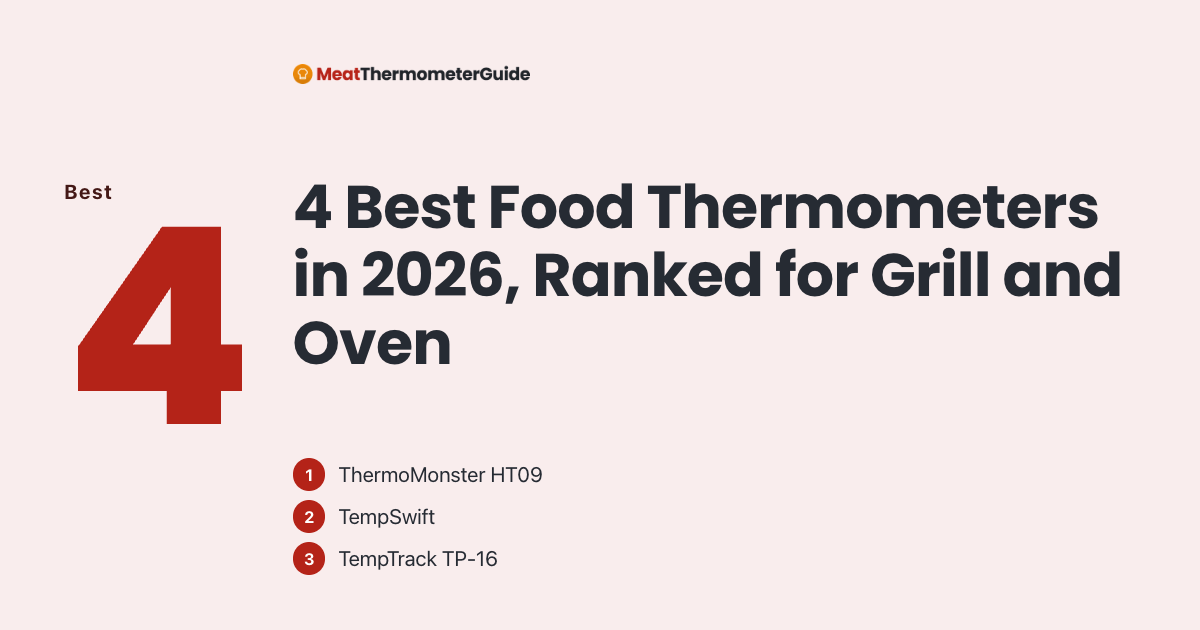 Top 4 Picks
4 Best Food Thermometers in 2026, Ranked for Grill and Oven
The best food thermometers for 2026: ThermoMonster HT09 reads in 0.5 seconds, TempPro TempTrack TP-16 adds a 40-inch cable and a timer for oven…
-
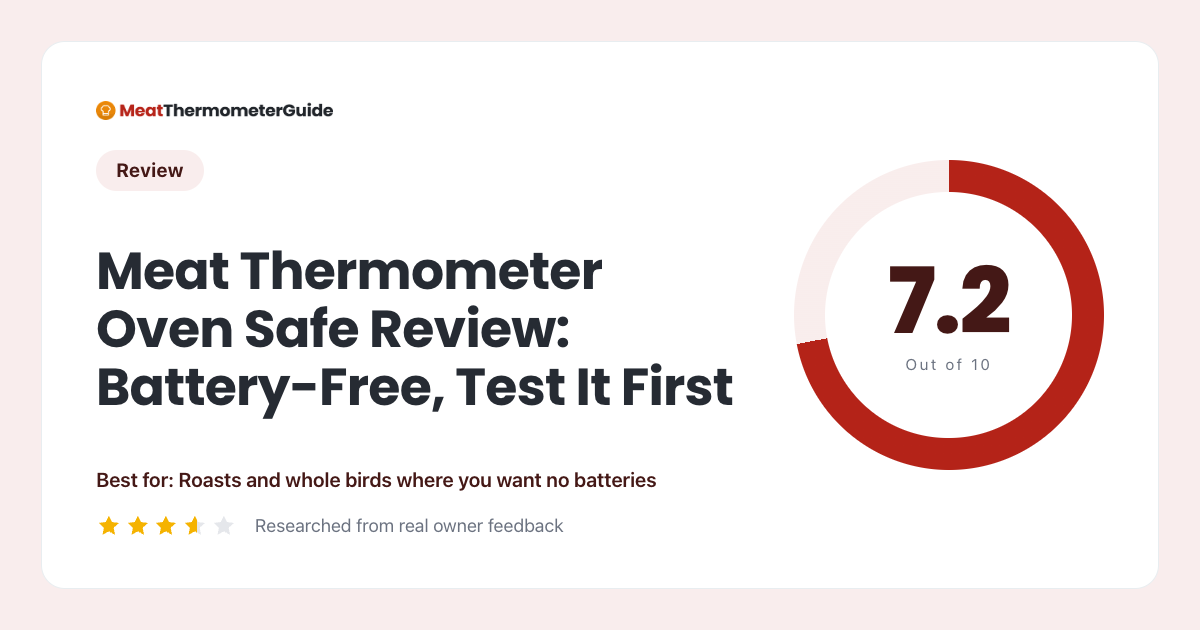 Review
Meat Thermometer Oven Safe Review: Battery-Free, Test It First
The AWLKIM MT-13 is an oven safe meat thermometer with a 4.5-inch probe, a 120°F to 220°F dial and no batteries. Test it in…
-
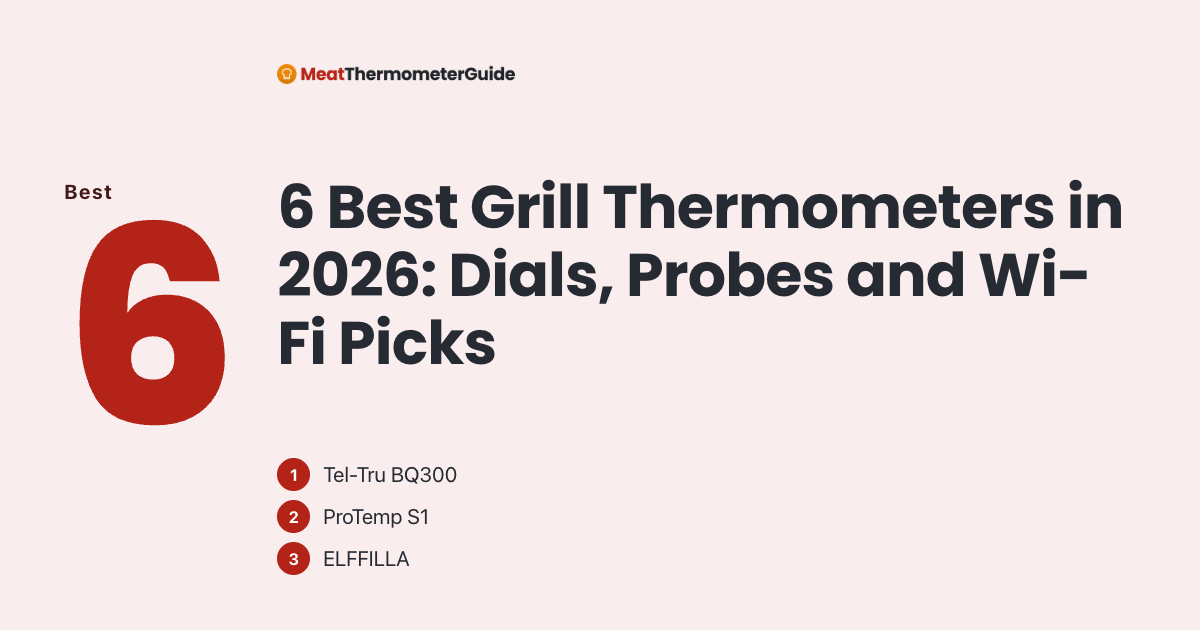 Top 6 Picks
6 Best Grill Thermometers in 2026: Dials, Probes and Wi-Fi Picks
Our top grill thermometer is the Tel-Tru BQ300, a 3-inch dial with a 4-inch stem. We also rank the ProTemp S1 and Weber iGrill…
-
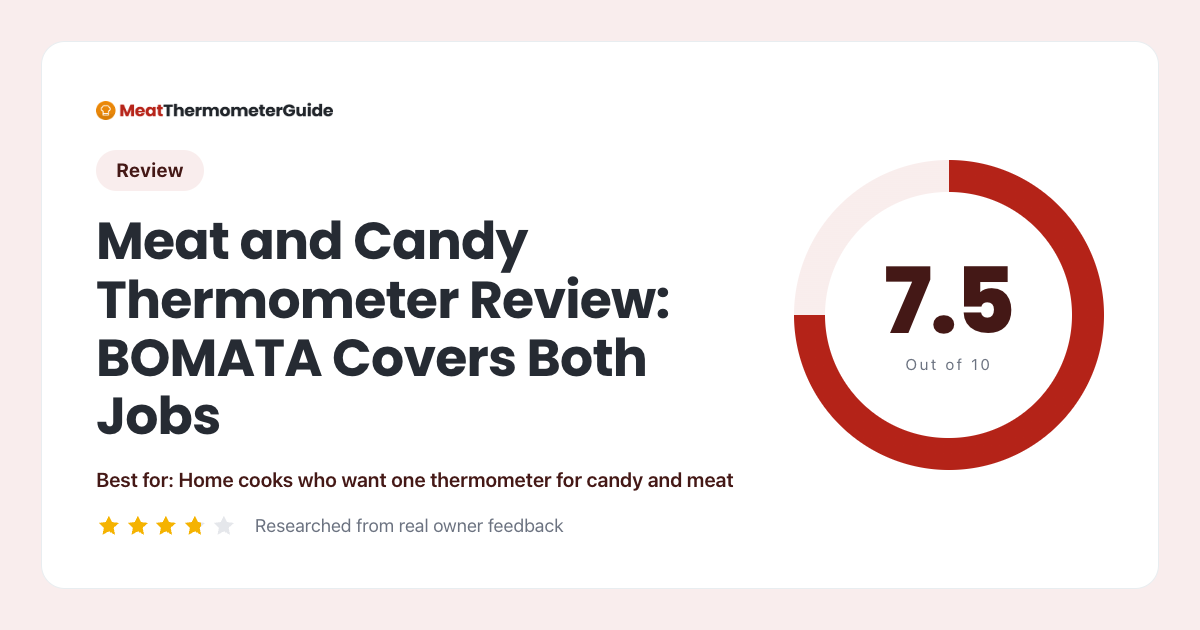 Review
Meat and Candy Thermometer Review: BOMATA Covers Both Jobs
Meat and candy thermometer review: BOMATA 2-pack with 10-inch and 5-inch probes, 572 °F top range and 1-3 second readings. Test accuracy first.
-
 Top 3 Picks
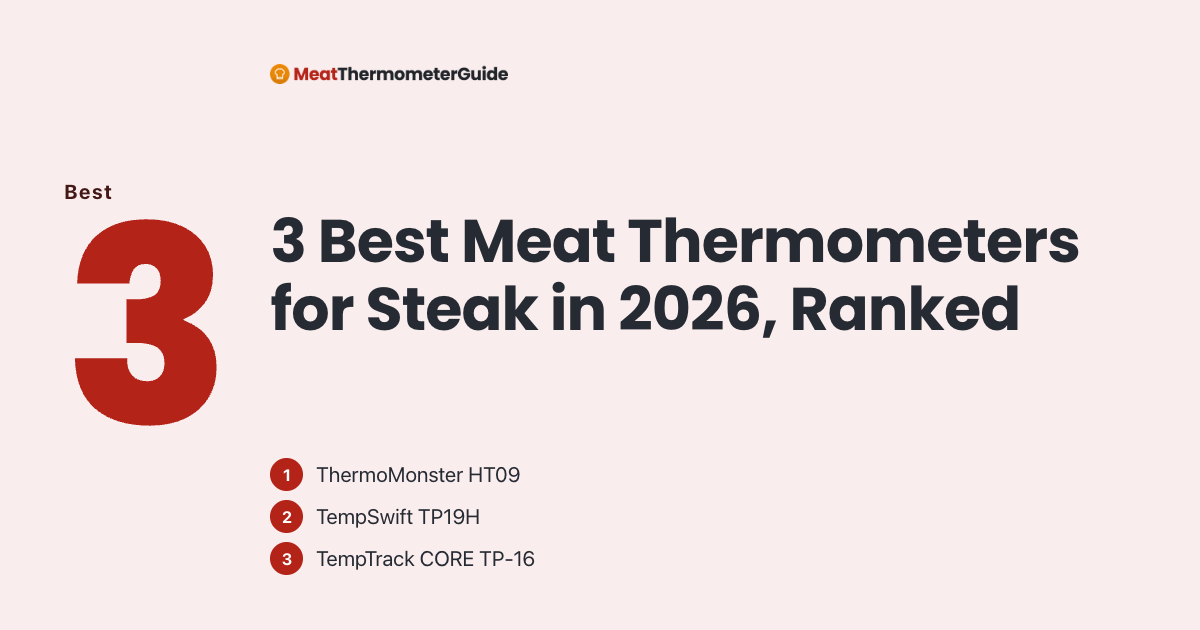
3 Best Meat Thermometers for Steak in 2026, Ranked
Meat thermometers for steak ranked: ThermoMonster HT09 reads in 0.5 seconds, then TempSwift TP19H and TempTrack CORE TP-16, plus doneness temps.
-
 Comparison
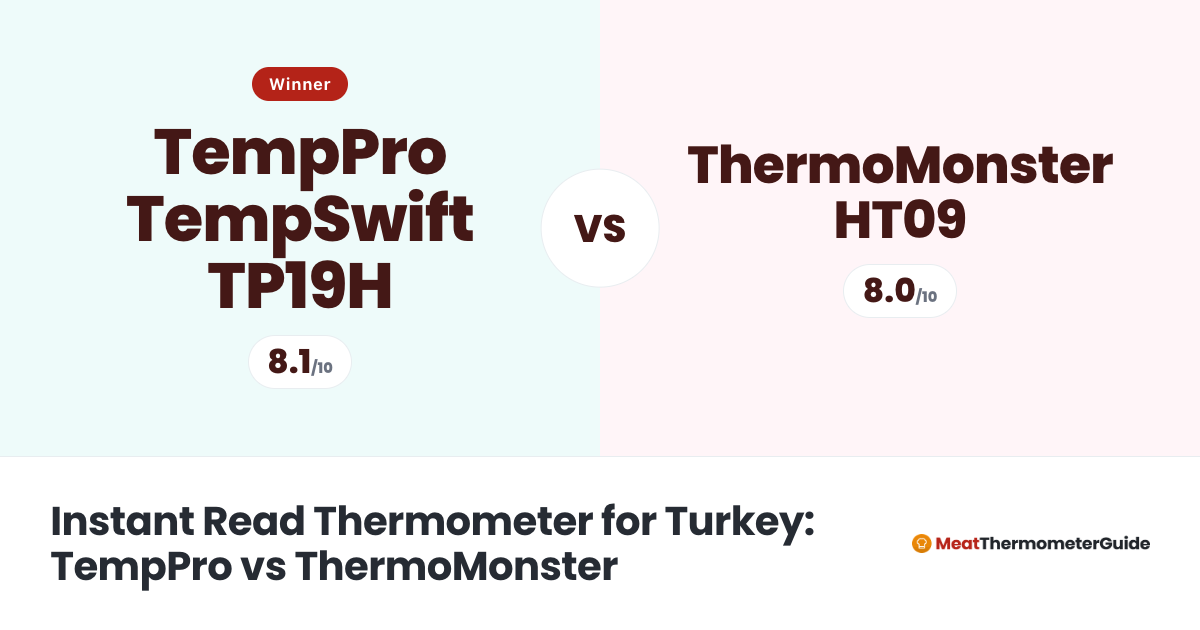
Instant Read Thermometer for Turkey: TempPro vs ThermoMonster
Instant read thermometer for turkey: TempPro TempSwift TP19H has a 4.3-inch probe, ThermoMonster HT09 reads in 0.5 seconds. Which one should you buy?
Why a meat thermometer
Why use a meat thermometer?
Color and cooking time are unreliable guides for doneness. A thermometer gives you a direct reading of what is happening inside the meat.
Accurate doneness
A reading at the thickest part of the meat shows whether it has reached the temperature you need. This removes much of the guessing.
Food safety
Checking internal temperature helps confirm poultry, ground meat, and other foods have reached safe minimums.
Better texture
Pulling meat at the right point helps prevent dry, overcooked results and keeps juices where they belong.
Less time wasted
You can stop checking the oven every few minutes and rely on a clear number instead.
Browse every topic
FAQ
Questions, answered
What is the difference between an instant read and a probe meat thermometer?
An instant read thermometer gives a quick reading when you insert the tip into the meat for a few seconds. A probe thermometer stays in the meat during cooking and often has a cable that runs to a display outside the oven.
Where should I insert a meat thermometer?
Insert the probe into the thickest part of the meat, away from bone, fat, and the pan. Check manufacturer guidance for your specific model, since placement can vary by thermometer.
Do I need a digital meat thermometer?
A digital meat thermometer usually shows readings faster and more clearly than a dial model. Many home cooks prefer digital for its readability, though analog models can still work well for occasional use.
How often should a meat thermometer be calibrated?
Check calibration before important cooking, using an ice water test or boiling water test as described in the manual. If the reading is off, follow the manufacturer’s instructions to adjust it or replace the thermometer.
What is the best meat thermometer for home cooks?
The best meat thermometer depends on how you cook, such as quick weeknight meals, roasts, or grilling. Compare response time, probe length, display clarity, and battery type before choosing.
Can a meat thermometer be used for grilling and smoking?
Yes, many models are designed for grills and smokers and can handle higher heat or longer cook times. Check the rated temperature range and probe cable length to confirm it suits your setup.
About Meat Thermometer Guide
How we research our recommendations
Meat Thermometer Guide is written by the Meat Thermometer Guide Editorial Team for home cooks who want clear, practical advice. We do not test products hands-on. Instead, we review manufacturer specifications, user manuals, and verified owner reviews to explain how each type works and who it suits.
We aim to be plain and useful. When a thermometer has limits, such as slow response or a short probe, we say so. Our goal is to help you pick a tool that fits how you cook.
Read how we research or learn more about us.
Our promises
- Recommendations based on specs, manuals and verified owner reviews
- Clear notes on strengths and limitations
- Plain language with no hype
- Corrections made promptly when information changes